We are pleased to share a policy brief produced by Andrew Remmy Muwaza, a current student in the SPIBES East Africa programme. The brief, titled Unfinished Business in Uganda’s Freshwater Ecosystem Restoration: An Integrated Assessment of Socio-Ecological Resilience Indicators in Restored Sironko River Wetland, Eastern Uganda, was written as part of his MSc research and reflects his own findings and recommendations.
About the brief
Uganda’s freshwater ecosystems are degrading at an unprecedented rate, under pressure from anthropogenic activities and accelerating climate change. The Sironko River wetland, extending approximately 97 km across the Sironko and Bulambuli Districts in eastern Uganda, has been the site of government-led Ecosystem-based Adaptation restoration efforts since 2012. But restoration alone, Andrew argues, is not enough. Uganda’s freshwater ecosystems must be built to withstand shocks, maintain functionality, and adapt to changing conditions over time. His brief assesses whether current restoration efforts are delivering that kind of genuine socio-ecological resilience — and finds significant gaps.
Key findings
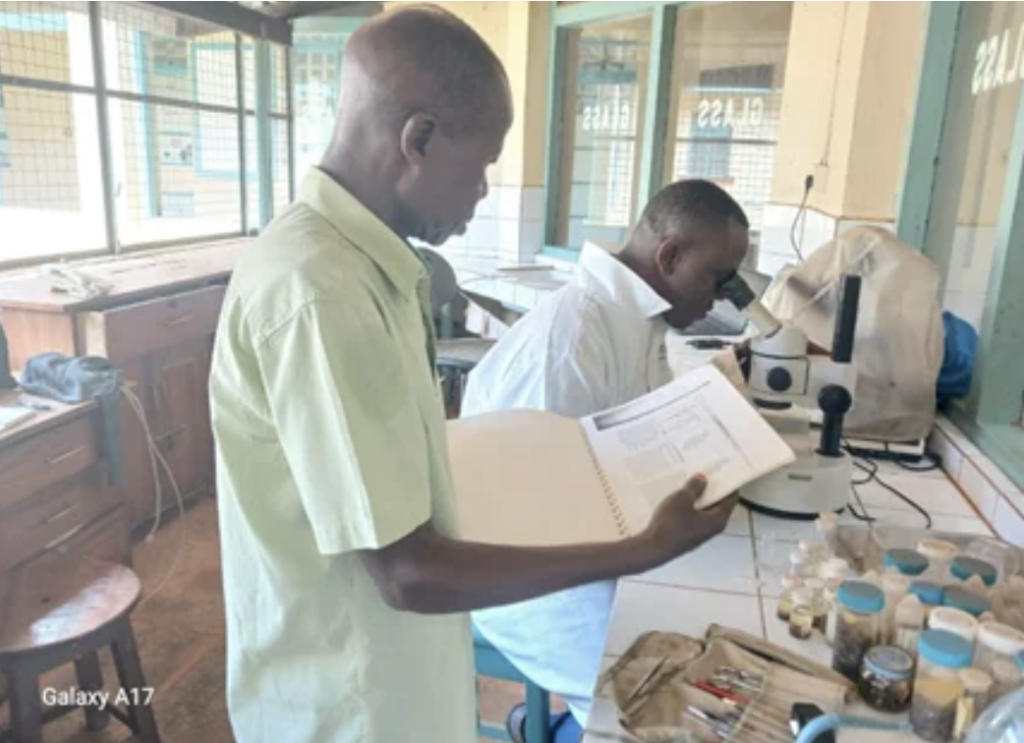
Andrew’s research drew on an exceptionally comprehensive evidence base: macroinvertebrate surveys at 10 sampling sites, 33 vegetation plots across riparian forests and home gardens, a 10-year GIS and FRAGSTATS landscape assessment, 292 household interviews across 12 villages, and an institutional governance analysis using ego-alter network analysis.
The findings are sobering. Macroinvertebrate diversity showed no significant improvement in restored reaches compared to unrestored ones. Riparian forests were dominated by the non-native Eucalyptus grandis, with very low tree species diversity. Despite restoration efforts, wetlands continued to experience progressive fragmentation and isolation, with a declining largest patch index. Community participation was largely consultative rather than meaningful — while 84.2% of respondents reported being consulted, none had any influence over decisions. An overwhelming 86.7% said their traditional ecological knowledge was not integrated into formal restoration programmes. Institutional governance was found to be highly centralised and fragmented, with a network density of just 0.05 and a fragmentation index of 0.91.
Recommendations
Andrew calls for a fundamental shift — from reactive restoration to transformative intervention that addresses the underlying drivers of degradation. His recommendations include building institutional capacity for socio-ecological resilience, embedding traditional ecological knowledge into national wetland policy, conducting a national freshwater ecosystem status assessment to identify ecosystems at risk of irreversible thresholds, establishing genuinely participatory governance structures, securing land tenure for wetland-dependent communities, strengthening domestic financing for livelihoods and restoration, and expanding restoration from site-level interventions to the full catchment scale.
You can download Andrew’s full policy brief below: