We are pleased to share a policy brief produced by Antoinette Emeldah Moleele, a current student in the SPIBES East Africa programme. The brief, titled Harnessing the Biodiversity–Climate Nexus to Strengthen Conservation Policy and Decision-Making in Botswana: Evidence from the Mokolodi Nature Reserve (MNR), was written as part of her MSc research and reflects her own findings and recommendations.
About the brief
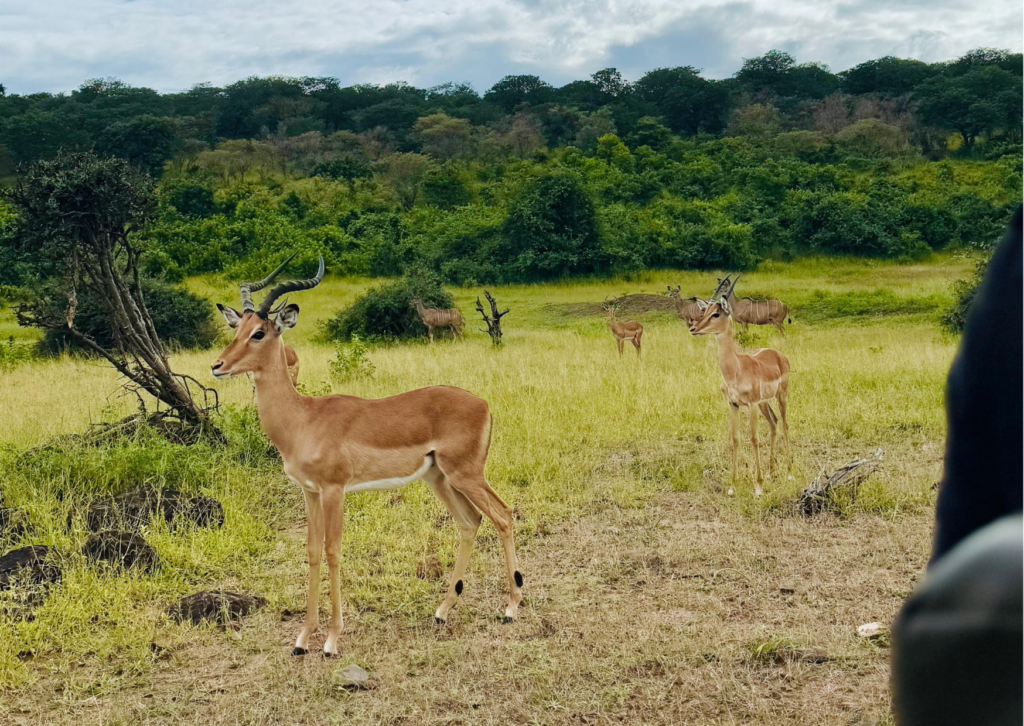
Botswana is home to exceptional biodiversity — from the Okavango Delta, a Ramsar and UNESCO World Heritage Site, to the Kalahari Desert and one of the world’s largest elephant populations. Yet climate change poses a growing threat to this natural wealth, with projections pointing to a hotter, drier Southern Africa and intensifying pressures on ecosystems, land use, and livelihoods. Weak policy implementation has left Botswana’s ecosystems increasingly vulnerable, with environmental stresses spilling over into agriculture, health, finance, and local governance. Antoinette’s brief applies the biodiversity-climate nexus framework to the Mokolodi Nature Reserve to examine these interconnections and identify pathways toward more integrated, effective policy responses.
Key findings
Antoinette’s research combined interviews with 20 experts across agriculture, environment, energy, local government and youth sectors with a futures thinking workshop involving 40 stakeholders, and a 30-year analysis of land use and land cover changes in the reserve from 1995 to 2025. Participants reported experiencing the effects of biodiversity-climate interactions in their daily lives, including increased wildlife-livestock conflicts due to water scarcity and declines in endemic fruit trees and bird species. Land use analysis revealed a concerning increase in invasive woody species such as Vachellia tortilis and Dichrostachys cinerea, which compete with native shrubs and vegetation. Among four future scenarios developed through the workshop — business as usual, economic optimism, environmental optimism, and policy reform — the environmental optimism scenario emerged as the strongest pathway for long-term sustainable development.
Recommendations
Based on her findings, Antoinette calls for the biodiversity-climate nexus model to be embedded into national and sectoral policy planning processes, and for actionable implementation strategies with clear timelines and measurable targets to be developed at all levels of government. She recommends mandatory inclusive stakeholder engagement in policy design and review, stronger legal enforcement with clear consequences for non-compliance, robust monitoring frameworks, and the integration of agro-ecological practices into agricultural planning to promote climate-resilient and biodiversity-friendly food systems.
You can download Antoinette’s full policy brief below: