My interest in conservation began close to home. As a Water and Forest Engineer from Guinea, I have always been drawn to the processes and policies that govern the management of natural resources across Africa — and to understanding why, despite the many international and national frameworks in place, biodiversity continues to decline. Joining the SPIBES MSc gave me the tools to examine those frameworks critically, to understand the relationship between science, policy and practice, and to contribute meaningfully to conservation efforts at both national and international levels.
The programme has significantly deepened my technical expertise. I developed skills in biodiversity modelling, using advanced tools to predict and analyse biodiversity patterns and inform conservation planning. I also gained hands-on experience in plant species inventory processes — skills I am applying directly in my MSc fieldwork in Seredou, in the forests of Forest Guinea. Alongside this, the programme strengthened my understanding of nature-based solutions and how they can be used to address complex environmental challenges by working with natural processes rather than against them.
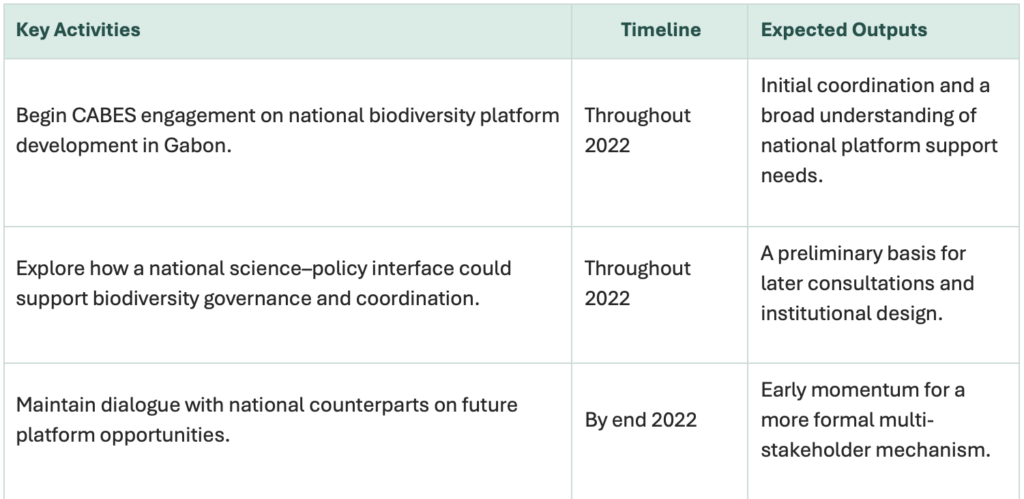
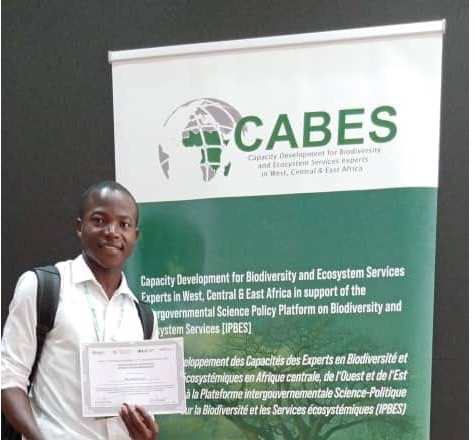
Beyond technical knowledge, SPIBES has broadened my perspective in ways I did not anticipate. Participating in the first CABES project workshop in Abidjan in October 2022 brought me into contact with professionals and researchers from across Africa and Europe, all working on shared conservation challenges. The exchange of experience and ideas at that event gave me a new way of seeing things — and reminded me that tackling biodiversity loss is a collective endeavour.
My long-term career goal is to contribute to sustainable development and conservation at national and international levels. The SPIBES programme has laid the foundation for that — equipping me with the expertise, the networks, and the broader vision I need to take on more challenging roles in environmental monitoring and management.