
National Science-Policy Platform on Biodiversity and Ecosystem Services
How the platform started
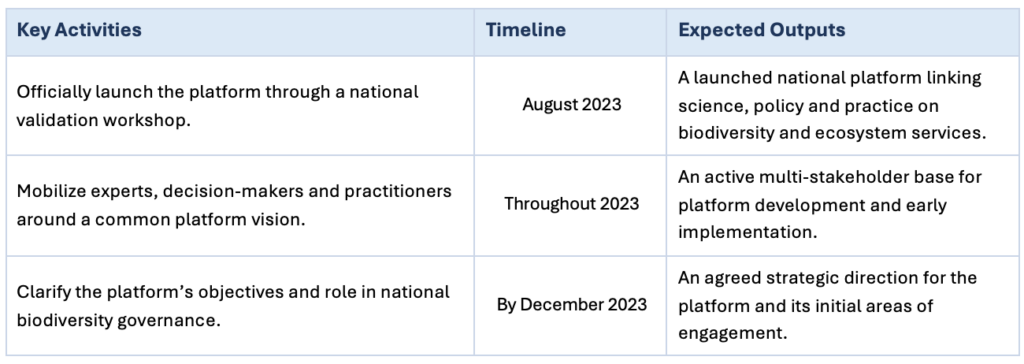
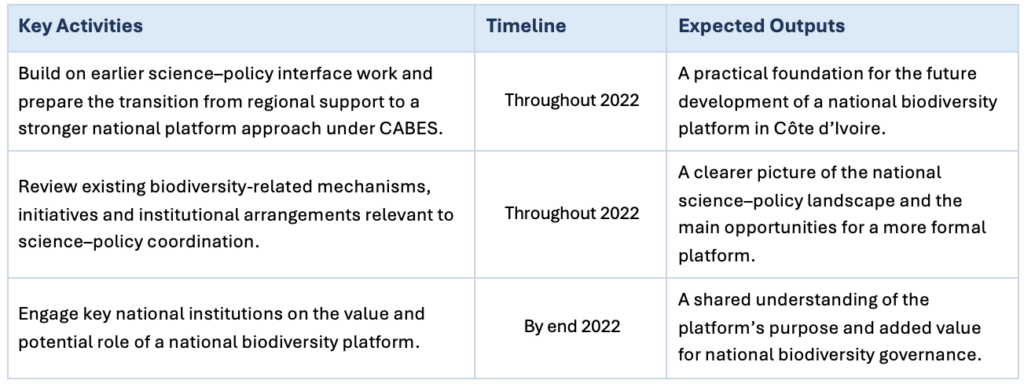
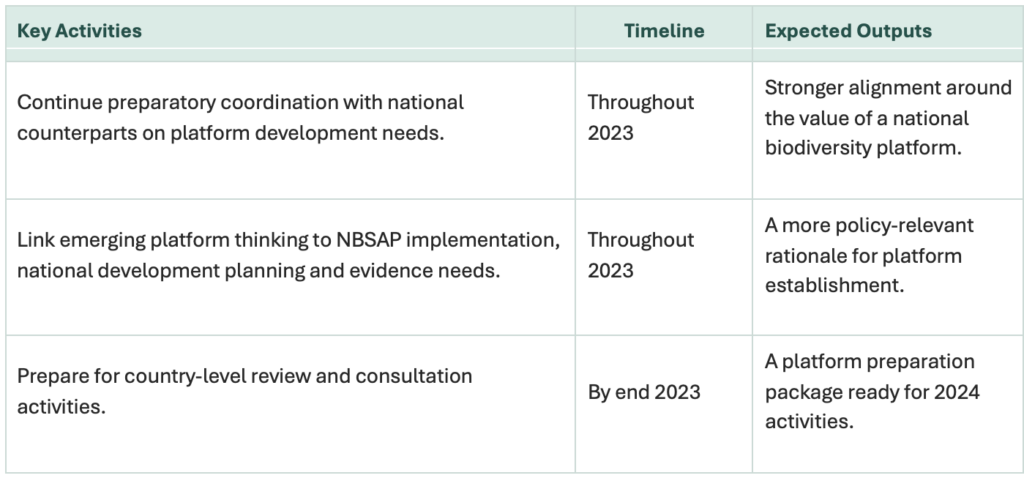
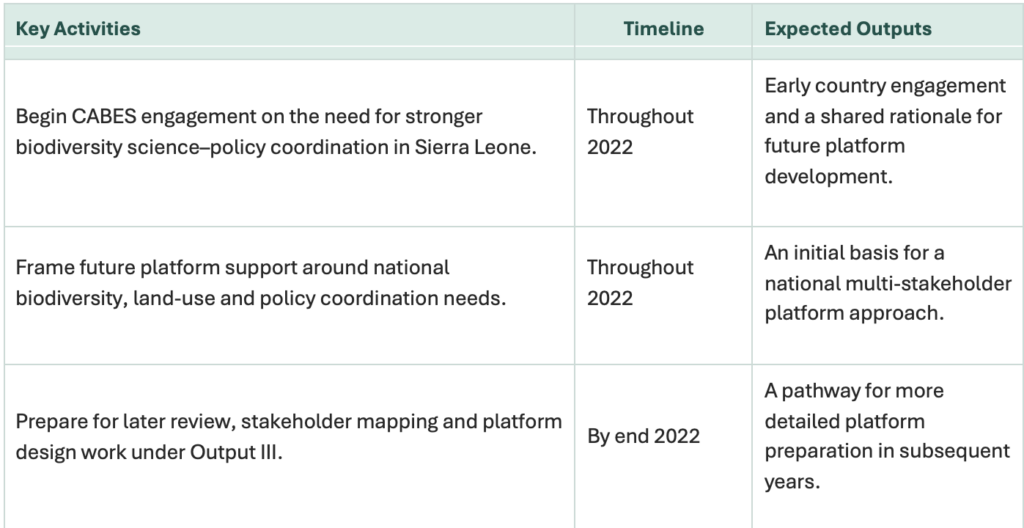
Côte d’Ivoire began establishing its national biodiversity platform in 2023 to strengthen its engagement with IPBES and improve how scientific knowledge informs biodiversity policy and practice.
The initiative was coordinated by the IPBES National Focal Point within the Ministry of Environment, with technical and financial support from CABES. From the outset, the objective was to create a structured national science–policy–practice interface capable of mobilising expertise, informing decision-making, and aligning national biodiversity governance with IPBES processes.
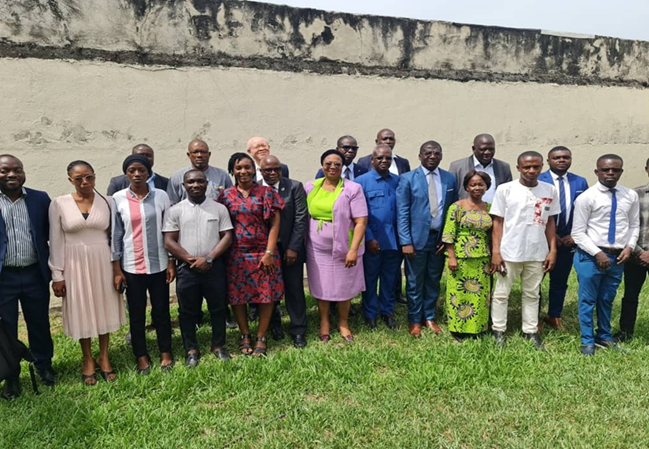
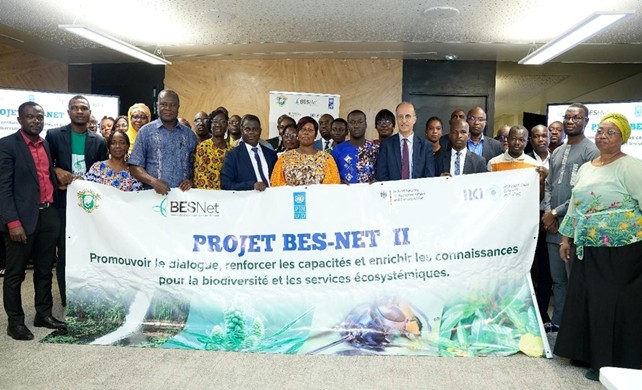
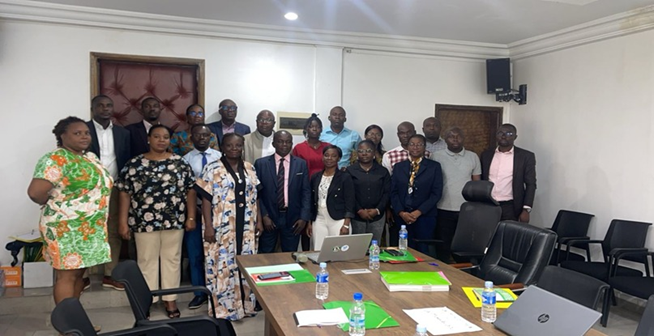
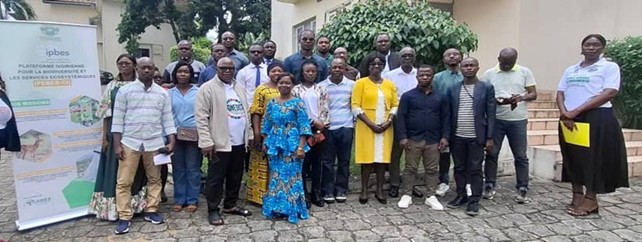
The platform was officially launched in August 2023 during a national validation workshop hosted at Université Félix Houphouët-Boigny, which brought together government institutions, researchers, universities, civil society and sectoral actors.
Early consultations confirmed the need for:
- stronger national research and technical capacity on biodiversity,
- improved coordination between science and policy, and
- a permanent mechanism to integrate local initiatives into the global IPBES network.
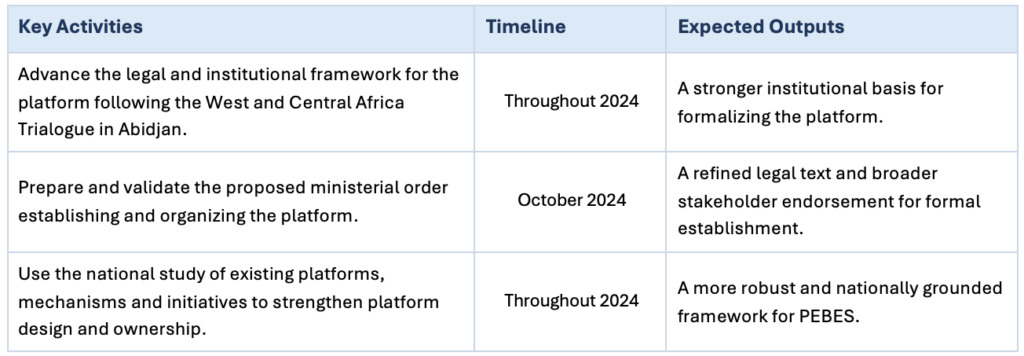
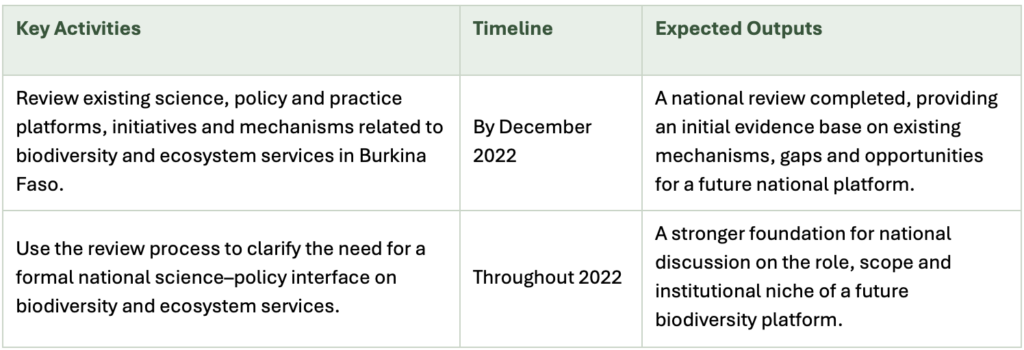
To inform its design, a national landscape study was undertaken to map existing science–policy–practice mechanisms. The findings reinforced the need for a formal national platform and directly informed the creation of the Plateforme Ivoirienne des Experts sur la Biodiversité et les Services Écosystémiques (PEBSE).
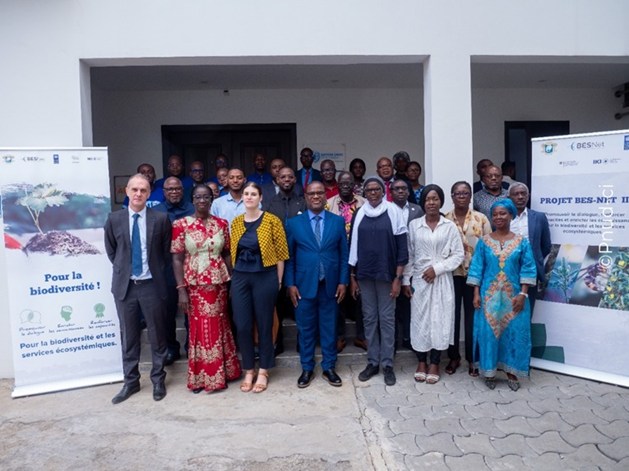
Following the successful West and Central Africa Trialogue hosted in Abidjan in March 2024, the platform also benefited from complementary support through United Nations Development Programme under the BES-Net programme.
Where things stand now
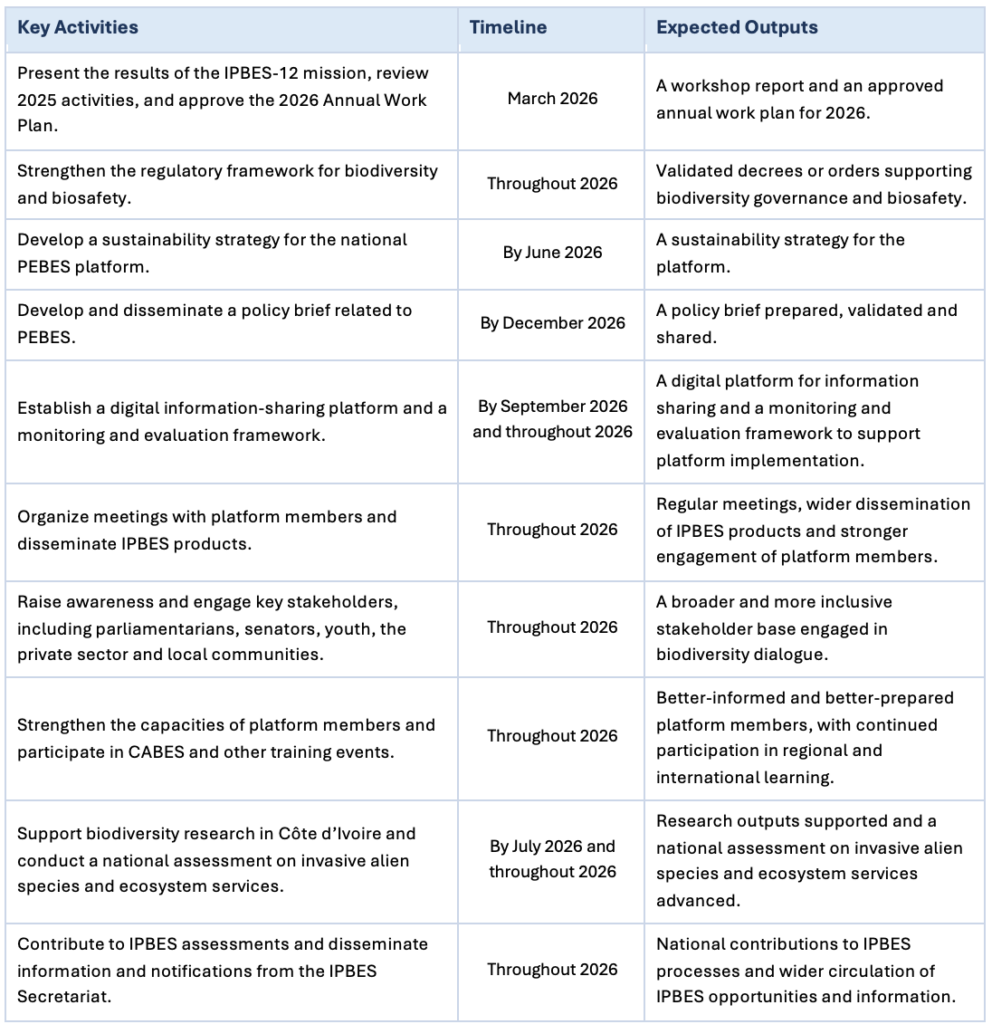
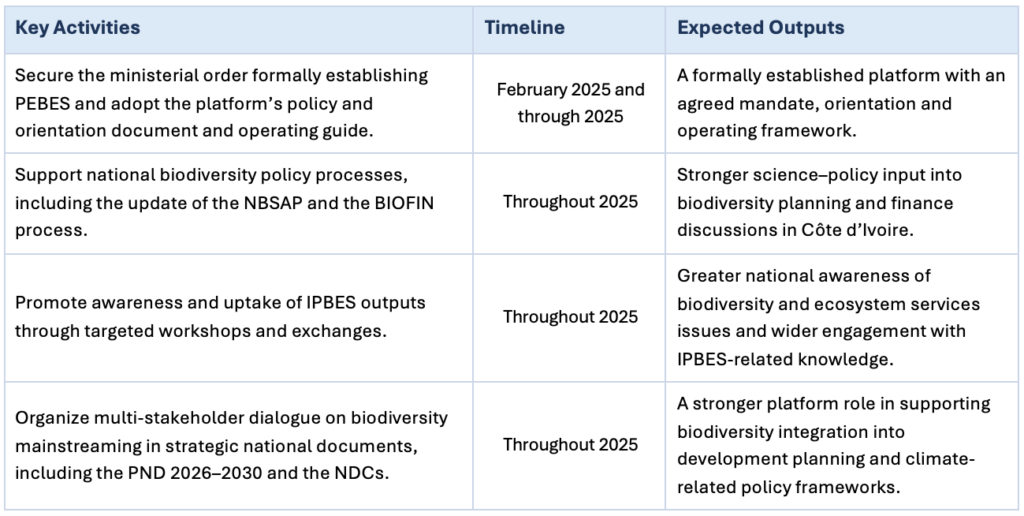
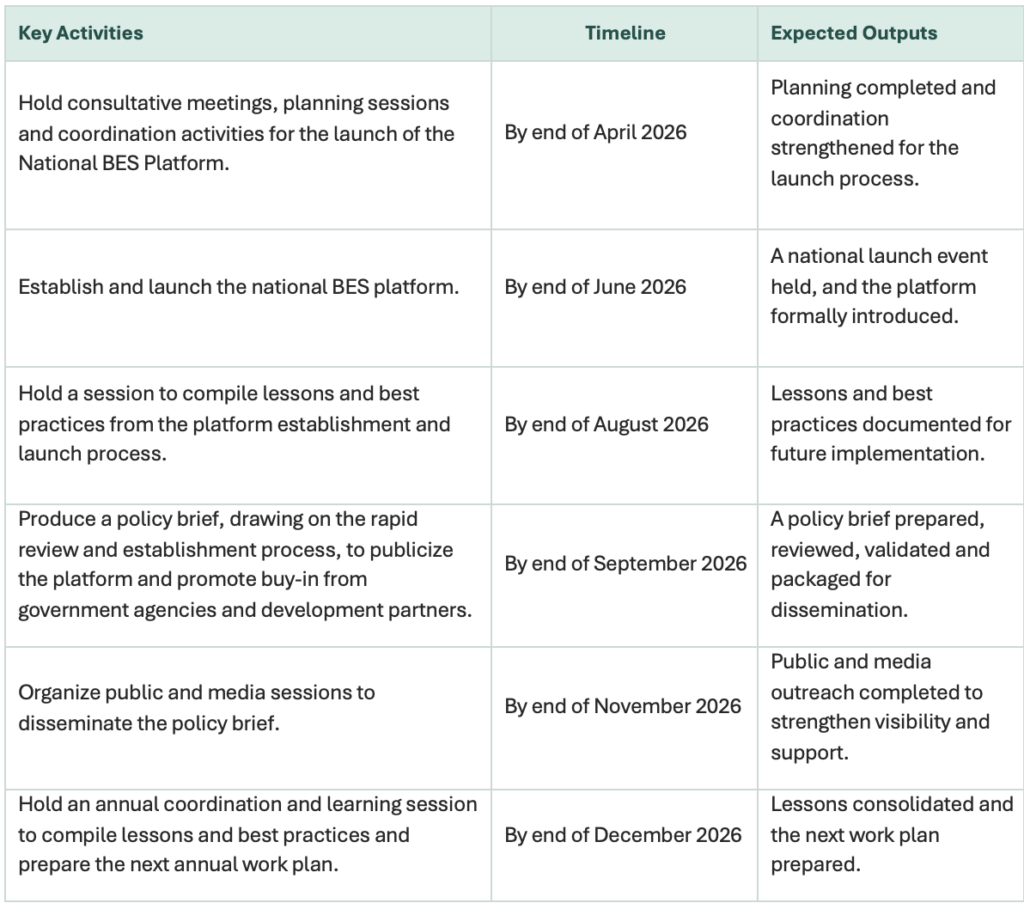
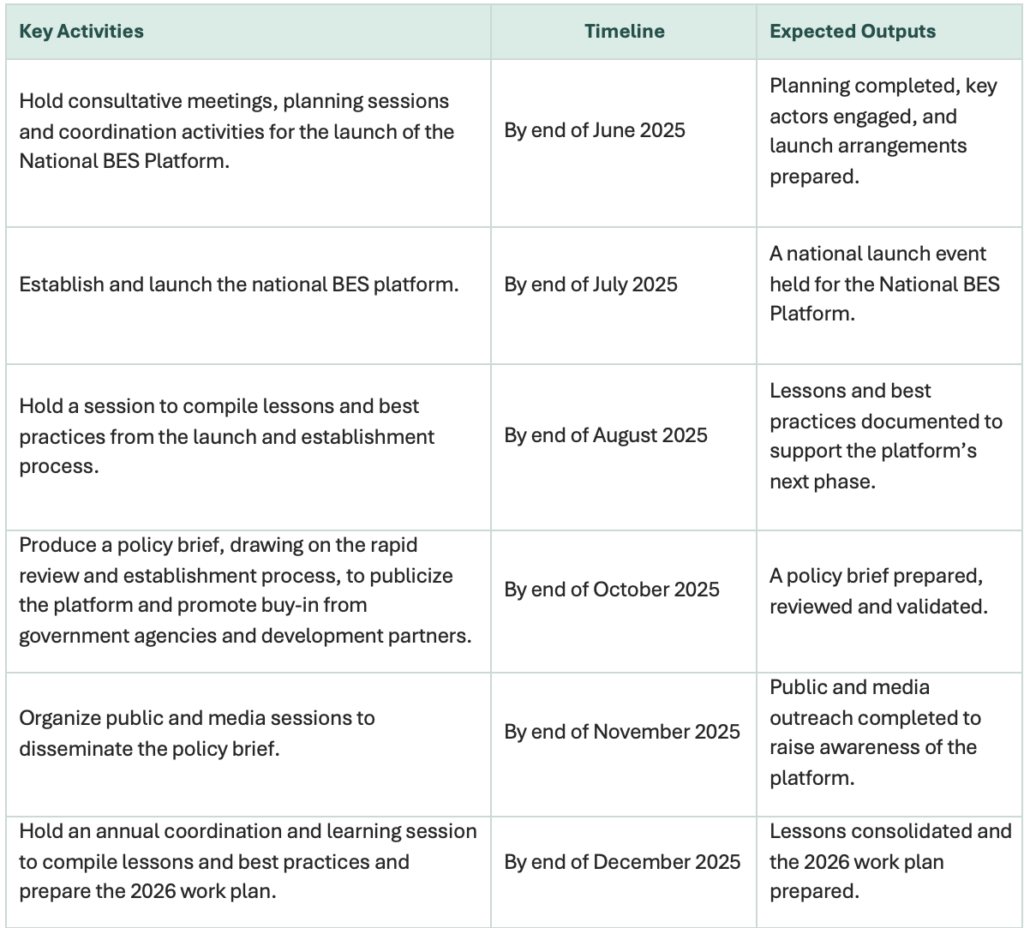
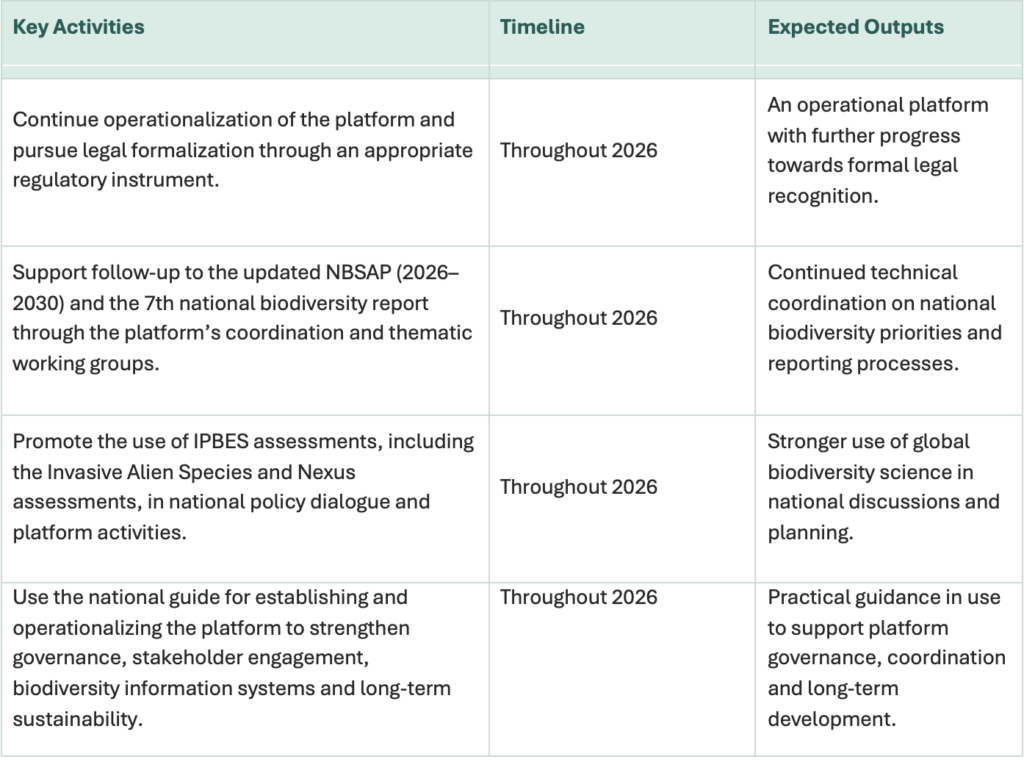
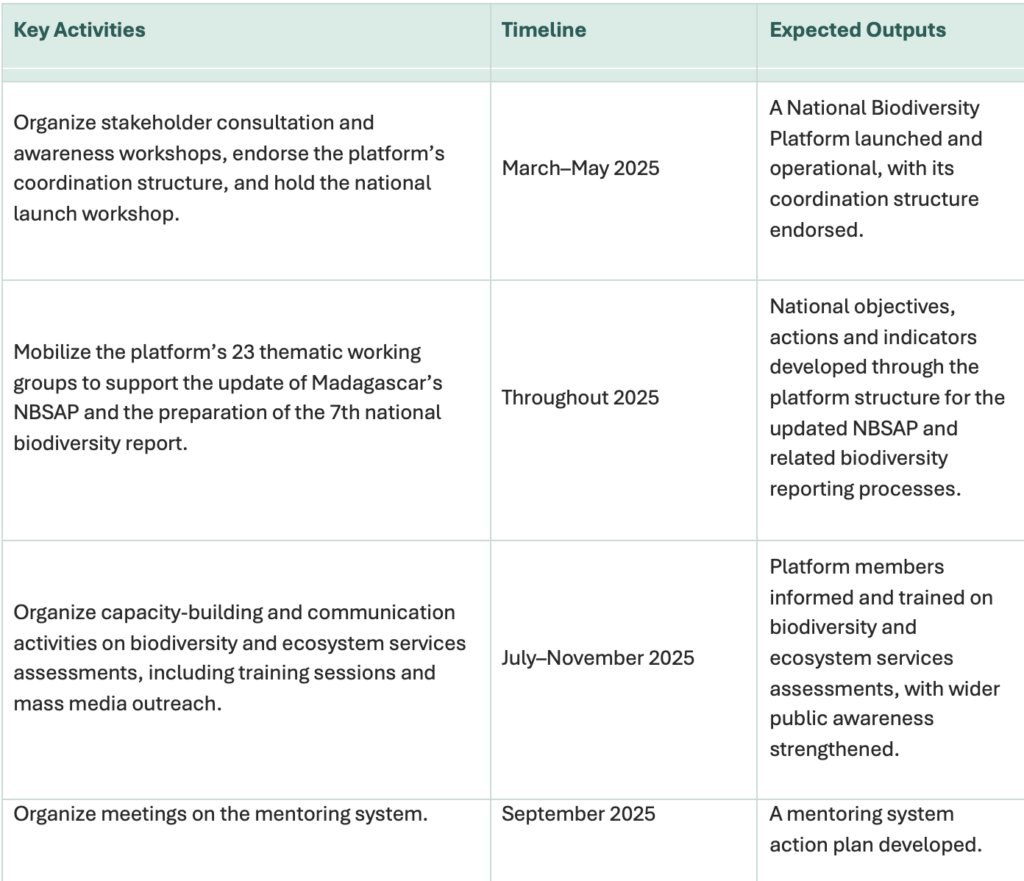
PEBSE is fully operational and implementing its 2025 action plan. The plan focuses on:
- consolidating the institutional and regulatory framework,
- strengthening stakeholder capacity,
- mobilising national expertise, and
- supporting the production and use of biodiversity knowledge in decision-making.
The platform functions as a national coordination mechanism connecting ministries, researchers, technical agencies, civil society organisations and sectoral stakeholders. It serves as the main channel for disseminating IPBES information and mobilising national contributions to assessments and policy processes.
Alongside operational activities, the platform has adopted:
- a policy and orientation document, and
- a practical operational guide defining its governance and procedures.
Formalisation and legal status
A major milestone was achieved through formal legal recognition.
The platform was officially established by:
Ministerial Decree No. 000049/MINEDDTE/DGE/DQEPR of 20 February 2025
This decree:
- formally creates the National Biodiversity Platform of Côte d’Ivoire (PEBSE),
- defines its mandate, organisation and functions, and
- provides an official institutional anchor within the national environmental governance framework.
The decree gives the platform authority to:
- conduct assessments,
- support capacity development, and
- strengthen science–policy communication on biodiversity and ecosystem services.
With this legal basis in place, Côte d’Ivoire is among the countries in the region with one of the most advanced and institutionalised national platforms.
Project - at a glance
- Status: Legally established and operational
- Official name: Plateforme Ivoirienne des Experts sur la Biodiversité et les Services Écosystémiques (PEBSE)
- Lead institution: Ministry of Environment (IPBES National Focal Point)
- Key milestones:
- Platform launch workshop (Aug 2023)
- National landscape study completed (2024)
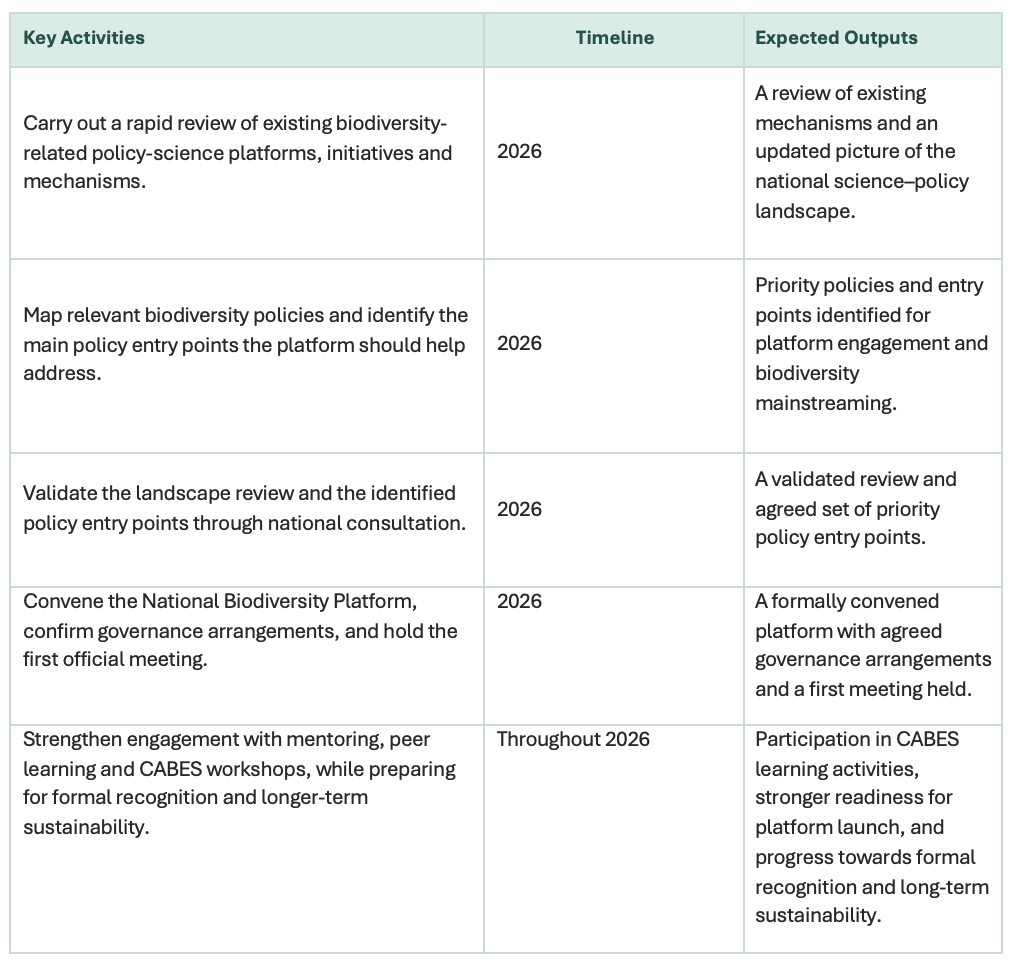
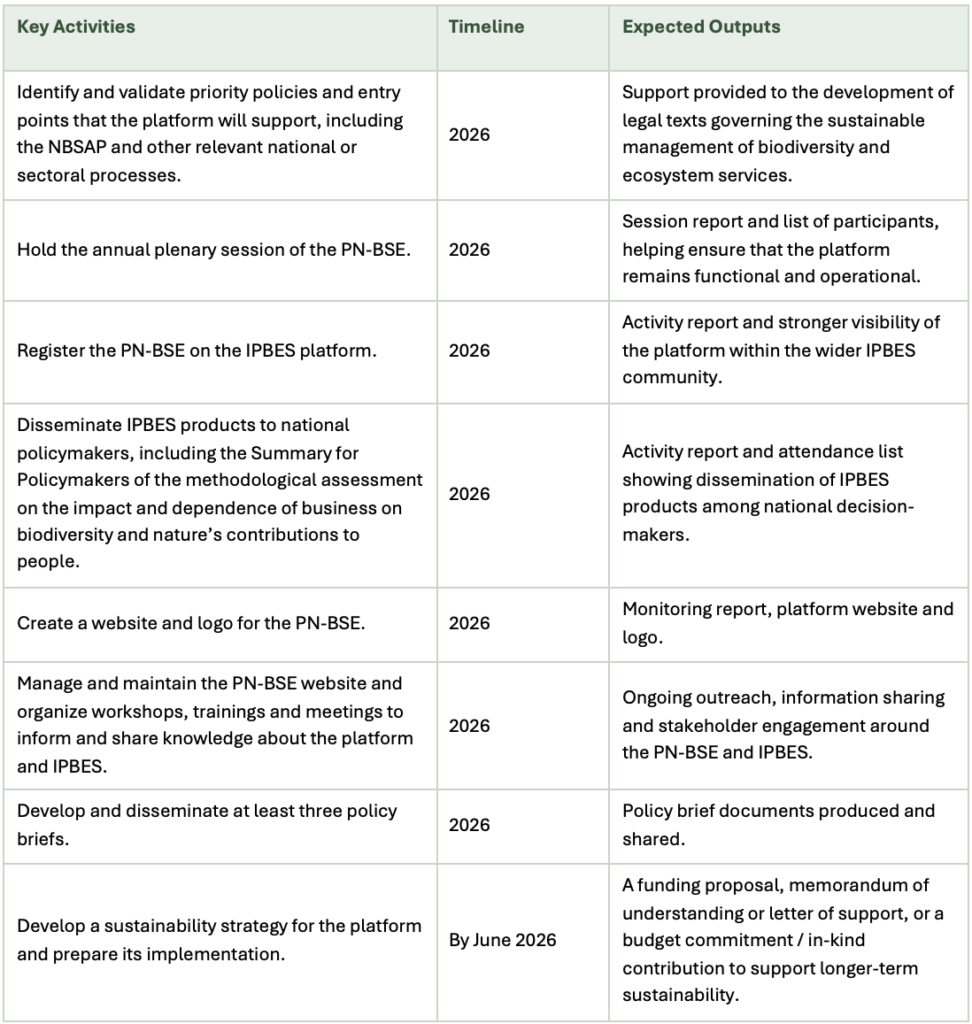
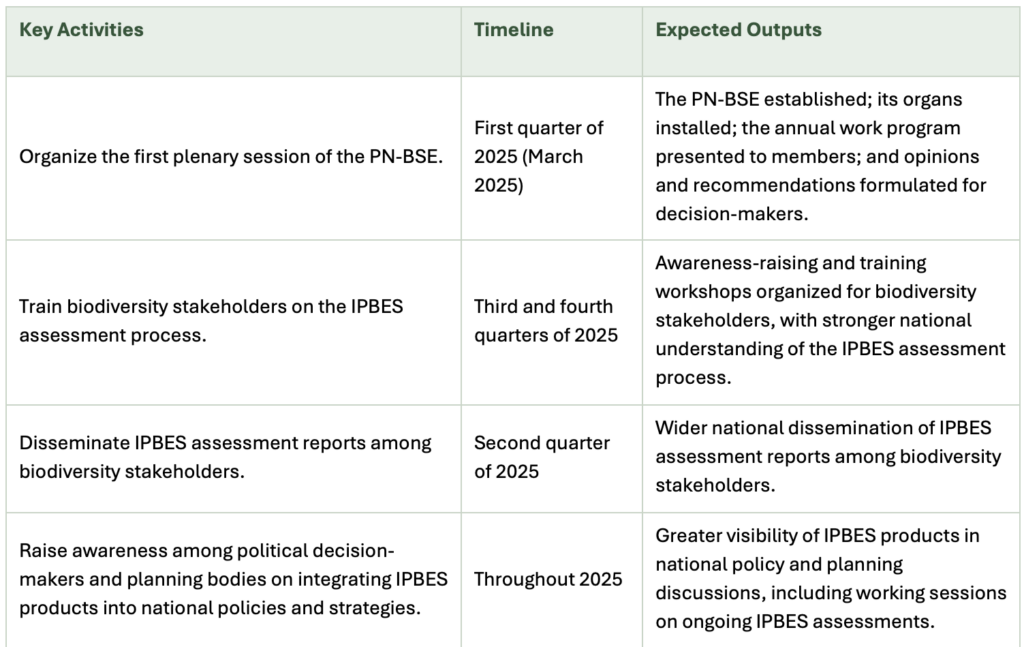
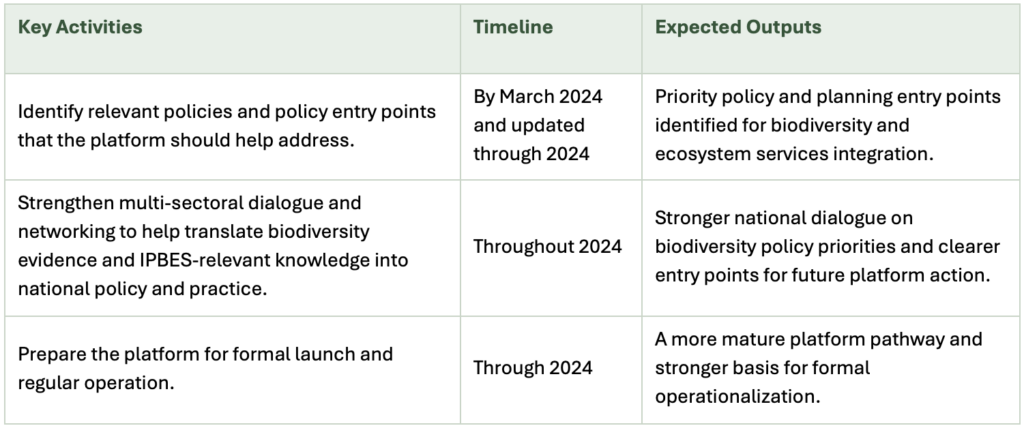
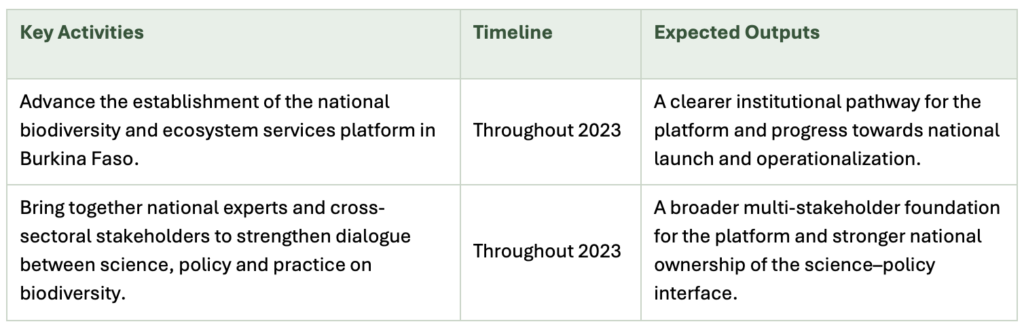
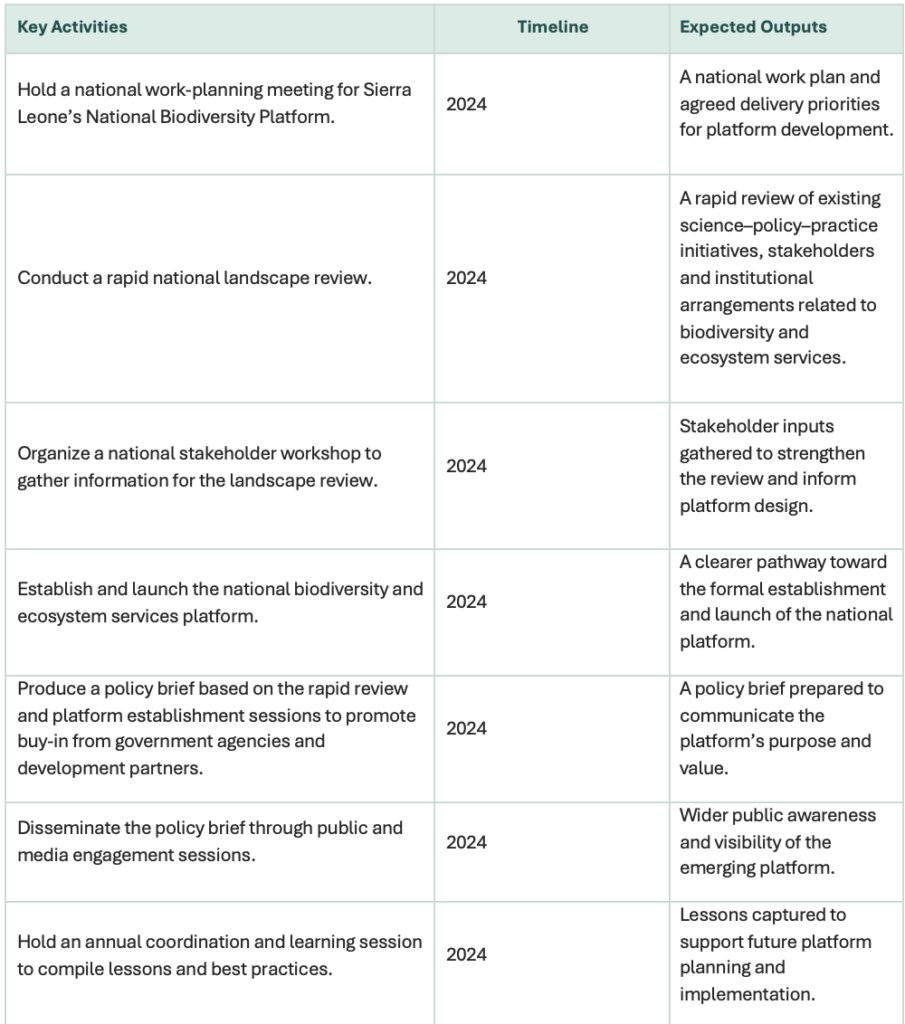
National Biodiversity Platform Annual Action Plans
Policy briefs
Attached below are policy briefs developed as a result of Côte d’Ivoire’s NBP:
1. Policy brief on: The Link Between Science, Policy, and Practice Regarding Biodiversity and Ecosystem Services in Côte d’Ivoire (French only)
2. Policy brief on: Priority policy entry points for integrating biodiversity and ecosystem services into national policies, planning, and decision-making in Côte d’Ivoire (French only)
Key successes and achievements
Since its launch, PEBSE has delivered several tangible results:
- Preparation and implementation of a national 2025 action plan covering institutional development, stakeholder engagement, knowledge production and policy support.
- Completion of a national landscape review of existing science–policy–practice initiatives and mechanisms, validated through a national workshop and submitted to UNEP-WCMC.
- Active dissemination of IPBES calls, assessments and opportunities to national experts.
- Participation in CABES online trainings and subregional preparation meetings for IPBES plenaries.
- Direct contribution to the update of Côte d’Ivoire’s National Biodiversity Strategy and Action Plan (NBSAP).
- Collaboration with the national BIOFIN process to strengthen biodiversity finance planning.
- Review and discussion of IPBES assessments on business impacts and dependencies on biodiversity, and on monitoring approaches.
- Organisation of targeted awareness workshops for:
- policymakers and technical staff of the Ministry of Environment,
- journalists and media professionals,
- multi-stakeholder groups integrating biodiversity into national planning instruments such as the National Development Plan (PND 2026–2030) and climate commitments (NDCs).
- Participation in national and international dialogues on OECMs and biodiversity beyond national jurisdiction (BBNJ).
Together, these activities demonstrate that the platform is already influencing policy discussions and strengthening the science–policy interface in practice.
Key partnership and support
The development and operationalisation of PEBSE has been supported through close collaboration between:
- the Ministry of Environment and its Directorate General for Environment
- national universities and research institutions
- civil society organisations and sectoral stakeholders
- United Nations Development Programme through the BES-Net programme
These partnerships have enabled both institutional consolidation and broad stakeholder engagement.
Direction of travel
Looking ahead, priorities include:
- establishing a digital information-sharing platform,
- putting in place a monitoring and evaluation framework,
- expanding engagement with parliamentarians, youth, private sector actors and local communities,
- strengthening the technical capacity of platform members,
- continuing participation in CABES and IPBES processes,
- mobilising sustainable funding and new partnerships, and
- supporting national assessments (including invasive alien species and other priority themes).
Latest updates
Workshops, publications, and field activities.
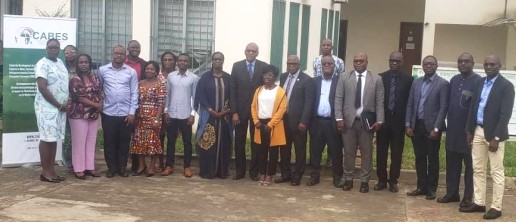
Côte d’Ivoire celebrates the launch of its national biodiversity platform
On August 10, 2023, at the Université Félix Houphouët-Boigny in Cocody, during the validation workshop for the study on existing science-policy-practice initiatives and mechanisms in Côte d’Ivoire, the country officially established its national biodiversity platform.