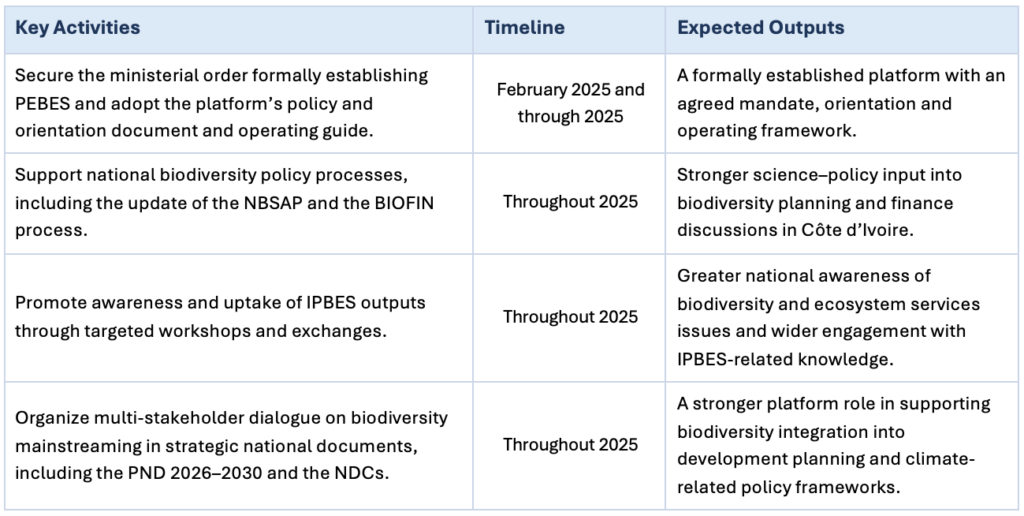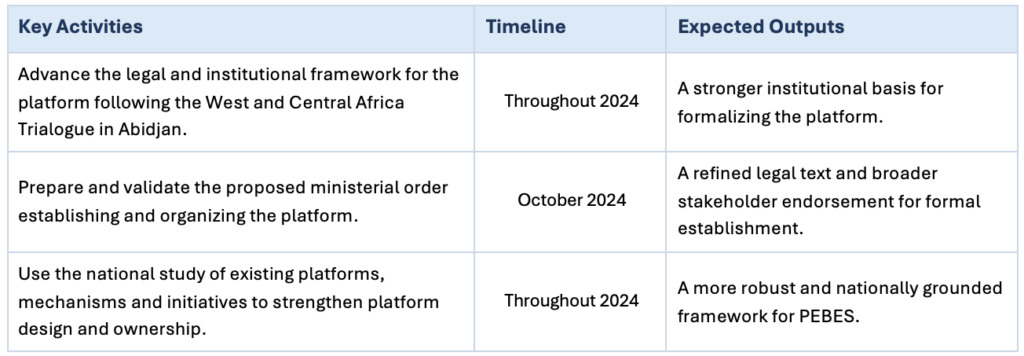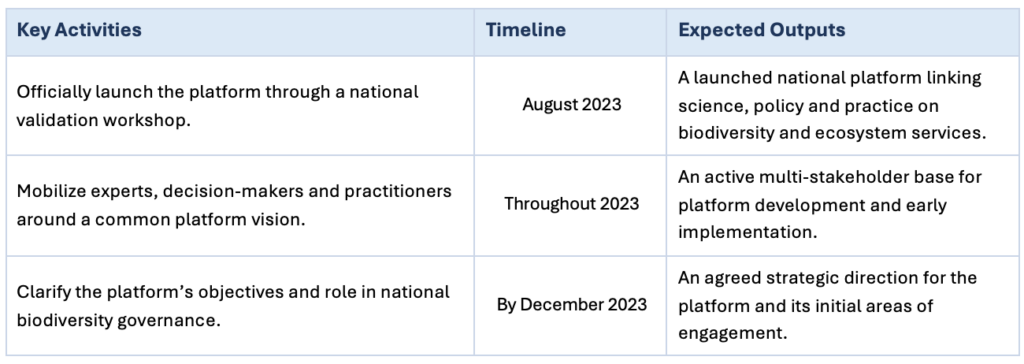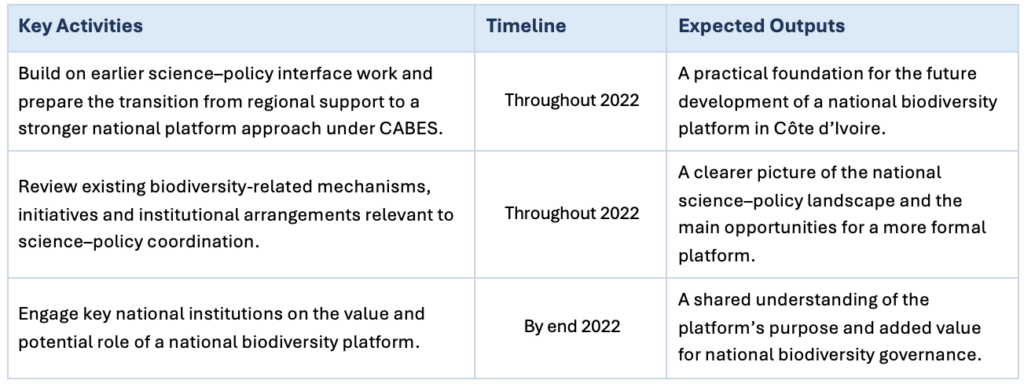

Welcome to CABES
Our Mission
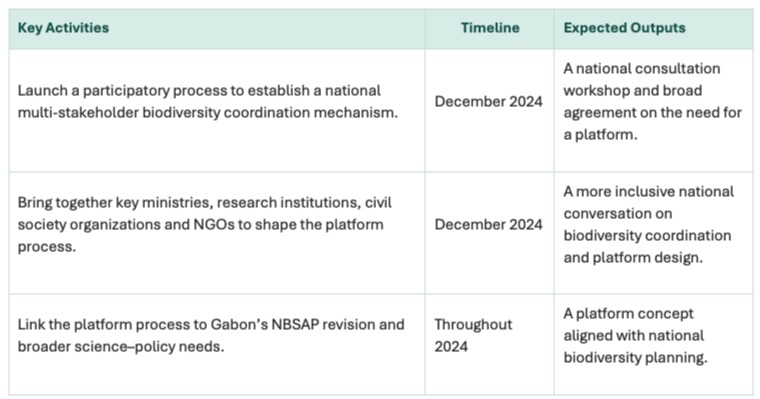
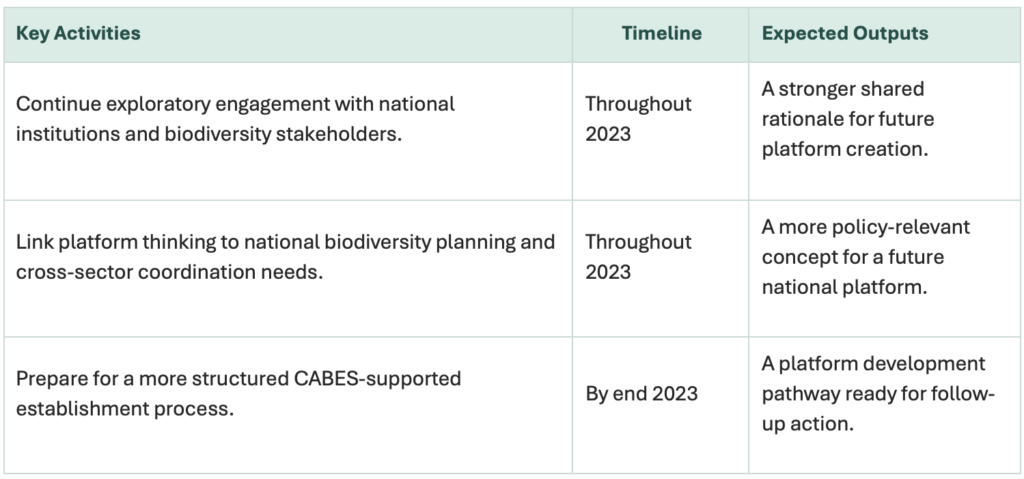
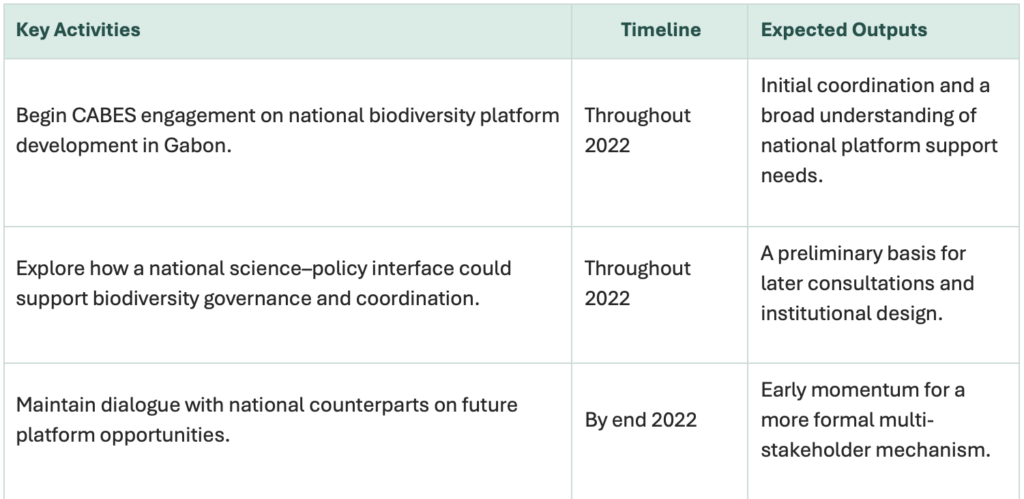
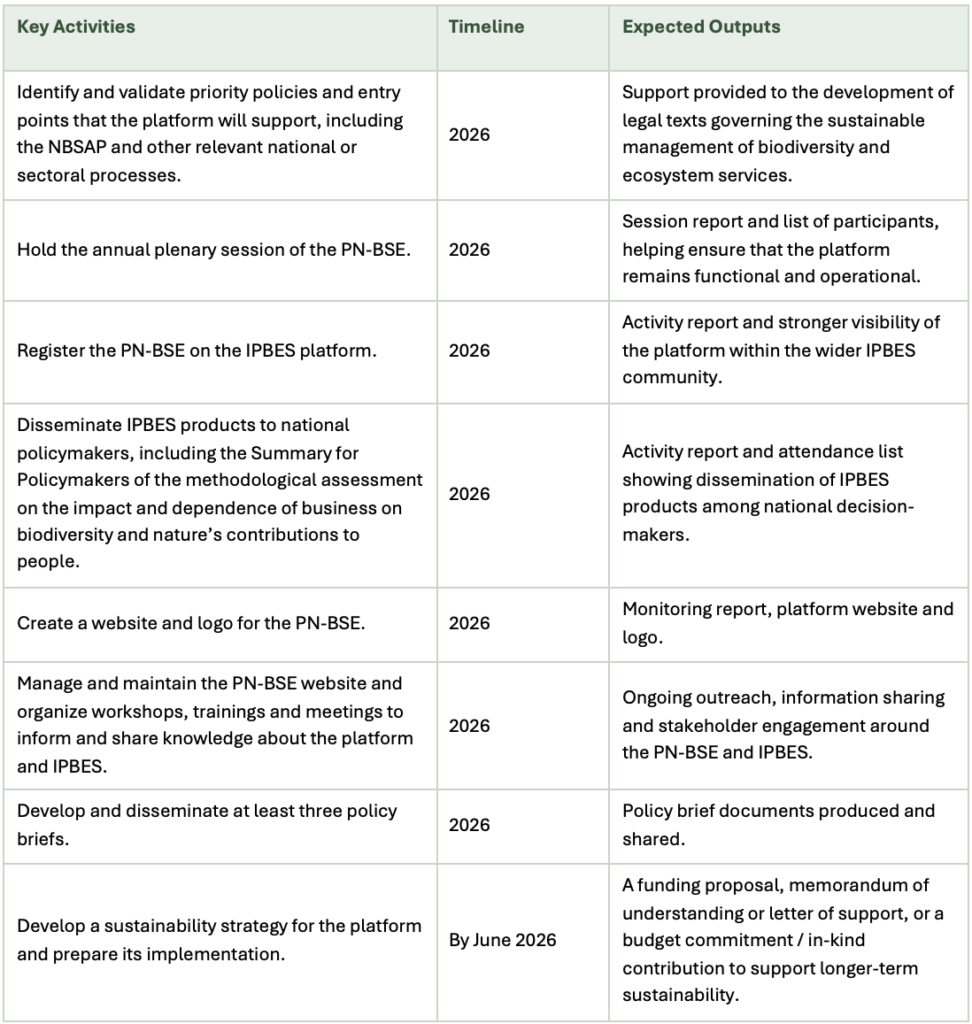
CABES – Capacity Development for Biodiversity and Ecosystem Services Experts – aims to facilitate a capacity-building framework across Africa in support of the Work Programme of the Intergovernmental Platform on Biodiversity and Ecosystem Services (IPBES), particularly in the preparation of IPBES assessments (global, regional, and thematic). CABES serves as a platform to connect scientists from universities, research institutions, and policymakers across Africa in the field of biodiversity and ecosystem services, strengthening the science–policy interface, fostering collaboration, enhancing policy coherence, and reinforcing the expert pool to support and disseminate IPBES assessments.
Our Goals
CABES focuses on equipping professionals across Africa with the skills and knowledge needed to actively contribute to the processes of the Intergovernmental Science-Policy Platform on Biodiversity and Ecosystem Services (IPBES). The programme is supported by the International Climate Initiative (IKI) of the Federal Ministry for the Environment, Climate Action, Nature Conservation and Nuclear Safety (BMUKN).
Goal one
to inform national decision-making processes amongst multiple stakeholder groups including researchers, practitioners from the public and private sectors, as well as non-governmental organisations (NGOs), indigenous and local knowledge (ILK) holders, women, and IPBES National Focal Points (NFPs) in target countries.
Goal two
to establish a network of science-policy platforms to contribute to the implementation of the IPBES rolling work programmes at national, sub-regional and regional level. Sub-regional refers to countries either in West, Central or East Africa, and the regional level represents the 38 countries.
Goal three
to train early career scientists, researchers and facilitators to manage science-policy interfaces (SPIs). Finally, CABES will develop capacities to support the implementation of political decisions for the management and sustainable use of Biodiversity and Ecosystem Services/Nature’s Contributions to People (BES/NCPs).
CABES Introduction Video
The SPIBES MSc Program
Partner Universities

University Félix Houphouët-Boigny (UFHB)
Abidjan, Côte d’Ivoire
University of Lubumbashi
Democratic Republic of Congo
Student Testimonies

“This Master’s Is an Empowering Tool” — Rejoice Vimbiso Matangi, Zimbabwe
Rejoice Vimbiso Matangi grew up in Zimbabwe acutely aware of a tension at the heart of African development — the pressure to grow economies and build infrastructure, often at the cost of the natural resources future generations depend on. For her, the SPIBES MSc programme at Université Félix Houphouet-Boigny is the space where that tension gets addressed: internationally, collaboratively, and across disciplines. From mapping climate financing at the Santa Fe Institute Complexity Global School in South Africa to researching how protected areas can support sustainable fisheries at Lake Kariba, Rejoice is already living the programme’s promise. Here, she shares what drives her — and why she believes development and conservation must be pursued as one.

“The Programme Is a Significant Asset for Achieving My Professional Goals” — Diallo Abdoulaye Djibril, Guinea
For Diallo Abdoulaye Djibril, the SPIBES MSc programme was more than an academic milestone — it was a gateway to the international science-policy arena. From reviewing IPBES scoping documents on business and biodiversity to assessing the underlying causes of biodiversity loss, Diallo gained hands-on exposure to the processes that shape global environmental governance. Today, back in Guinea, he applies that expertise as a biodiversity consultant for mining companies and on a World Bank-financed project spanning two government ministries. Here, he reflects on how SPIBES prepared him for a career at the intersection of industry, policy and conservation.

From Cashew Forests in Côte d’Ivoire to a PhD at Cambridge: The SPIBES Journey of Prisca Kouakou
When Prisca Kouakou graduated from the SPIBES MSc programme in 2018, she left with more than a degree — she left with the scientific confidence and interdisciplinary foundations to pursue a PhD at the University of Cambridge. From evaluating pollination services in cashew agroforests near Comoé National Park to assisting in the revision of the IPBES Global Assessment Report on Biodiversity and Ecosystem Services, Prisca’s trajectory is a testament to where rigorous training in conservation science and policy can lead. Here, she reflects on how SPIBES shaped her path — and where it has taken her.
More information about our work
Want to be a part of our expert network?
Subscribe to our CABES e-Newsletter
News

CABES/RESPIN Hosts First West Africa Sub-Regional Workshop on Integrated Biodiversity and Climate Policies
The CABES/RESPIN First West Africa Sub-Regional Workshop, hosted by the West African Science Service Centre on Climate Change and Adapted Land Use (WASCAL), took place

3rd CABES peer-to-peer learning event to prepare for the 12th IPBES Plenary
As part of the CABES Capacity Development Programme (CCDP) for professionals, CABES in collaboration with FRB (Fondation pour la Recherche sur la Biodiversité) organized its

Second free, self-paced course: “UNESCO course: Indigenous Peoples and local communities in Science-Policy-Practice Interfaces in Africa”
🚨 We’re excited to announce the launch of our second free, self-paced version of our course “UNESCO course: Indigenous Peoples and local communities in Science-Policy-Practice